
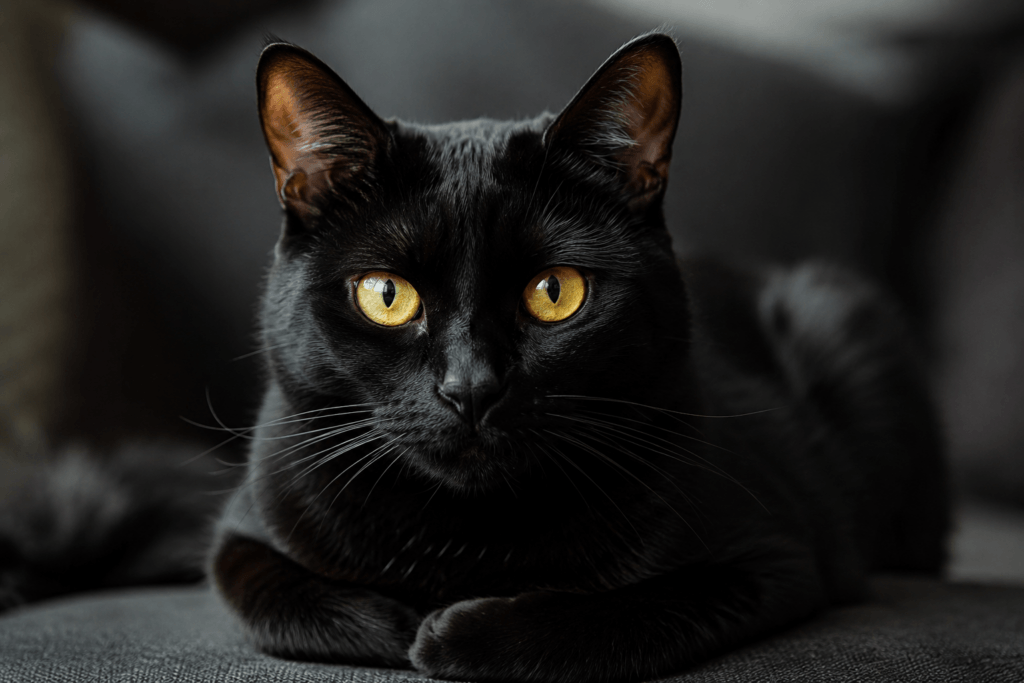
The Curious History of Black Cats: Why They Were Never Bad Luck
A shadow slips silently across a moonlit path. Two golden eyes gleam in the darkness. For centuries, this simple sight has inspired legends, superstitions, and stories that refuse to die.
Few animals have been as misunderstood as the black cat.
Even today, some people hesitate when a black cat crosses their path, wondering if an old superstition might hold a grain of truth. But the fascinating reality is that black cats were once celebrated, cherished, and even considered symbols of extraordinary good fortune.
So how did one of the world’s most elegant animals become associated with bad luck?
The answer lies in a tale spanning thousands of years.
Worshipped by Ancient Civilizations
Long before black cats became the stars of spooky stories, they were revered in Ancient Egypt. Cats were so highly valued that they were protected by law, and harming one was considered a serious offense.
The Egyptian goddess Bastet, often depicted with the head of a cat, represented protection, motherhood, fertility, and the home. Cats were viewed as sacred guardians, protecting grain stores from rodents and families from harm.
Their sleek black coats and mysterious appearance only added to their allure. Rather than fearing them, people admired them.
The Sailors’ Lucky Charm
Centuries later, black cats earned a reputation as symbols of good luck among sailors.
Life at sea was unpredictable and dangerous. Sailors often carried cats aboard ships to control rats and mice, but black cats were considered especially fortunate. Many believed they could protect a vessel from storms and ensure a safe return home.
In some fishing villages, wives kept black cats in their homes while their husbands were away at sea, believing the cats would safeguard their loved ones during their voyages.
If you had told those sailors that black cats would one day be called unlucky, they would have been genuinely confused.
When Fear Replaced Facts
The black cat’s reputation changed dramatically during the Middle Ages in Europe.
During times of fear, disease, and uncertainty, people often searched for explanations for events they could not understand. Superstitions flourished, and black cats became entangled in myths about witchcraft.
Their habit of roaming at night and their reflective eyes made them seem mysterious. Before long, stories spread claiming that witches could transform into black cats or that black cats served as magical companions.
None of these tales were based on reality, but they became deeply rooted in folklore and were passed down through generations.
The result was centuries of misunderstanding that still influence how some people view black cats today.
A Symbol of Good Luck Around the World
Despite these old European superstitions, many cultures have always viewed black cats positively.
In Scotland, a black cat arriving at your doorstep is said to bring prosperity.
In Japan, black cats are considered symbols of good fortune and happiness.
In parts of England, newlyweds were once given black cats as wedding gifts to bless their marriage with love and prosperity.
Even today, many people around the world consider black cats lucky rather than unlucky.
It turns out that whether a black cat is seen as fortunate or unfortunate depends entirely on which story you choose to believe.
The Real Truth About Black Cats
The truth is far less mysterious—and far more wonderful.
Black cats are simply cats.
They are playful. Affectionate. Curious. Intelligent. Silly. Loyal.
Some are adventurous explorers. Others are expert lap warmers. Some greet you at the door. Others prefer to supervise from a cozy blanket nearby.
Their coat color has absolutely no effect on luck, destiny, or the outcome of your day.
What it does affect, unfortunately, is how often they get adopted.
Because of lingering myths and misconceptions, black cats often spend longer waiting in shelters and rescues than cats of other colors. Yet the people who adopt them frequently discover what rescue volunteers have known all along: black cats are every bit as loving, charming, and unique as any other feline.
A Chance to Rewrite the Story
For thousands of years, black cats have been worshipped, celebrated, feared, misunderstood, and adored.
But perhaps their most important chapter is being written right now.
Every time someone chooses to adopt a black cat, they help replace centuries of superstition with compassion and understanding.
The next time you see a black cat, don’t think of bad luck.
Think of ancient temples, brave sailors, treasured family companions, and countless cats still waiting for a home.
Because the greatest myth about black cats isn’t that they’re unlucky.
It’s that they are anything less than extraordinary.